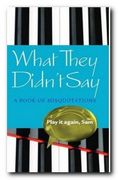
Play it again, Sam is the classic much-used phrase which is in fact a misquotation. What Ingrid Bergman actually says to Dooley Wilson in Casablanca is Play it, Sam. Play As Time Goes By. And Humphrey Bogart later demonstrating his emotional stoicism, says If she can stand it, I can. Play it. But for general circulation the misquotation has stuck. This is a compendium of well-known sayings, phrases, and quotations which are all inaccurate representations of the original. They get changed, mangled, and abbreviated for all sorts of reasons - and in many cases the later version completely obliterates the original. Sometimes they are what people mistakenly think or wish what somebody had said. What causes this to happen? Well, on seeing all these examples brought together, the answer appears to be that the misquotations are all slicker, more rounded and memorable than the originals. One example after another illustrates ... Read more >>
29 November 2006
What They Didn't Say


25 November 2006
TV - It's not cricket
 The bloody Test Match displaced News Night Review on television last night. So whilst soothing my outrage with a couple of extra glasses, I decided to watch the program. Crikey! The video editing is so tight, you'd imagine that cricket was a high speed game played at breakneck speed, instead of the boring plod it is. And you'd swear from the BBC's presentation of events that the Brits were knocking seven colours of shit out of the Aussies - yet I note from the actual score sheet that the reverse was happening. The players and their supporters behave just as yobbishly as at any football match. Do these people have no sense of style at all? And what's with all this face painting business? If they are claiming it’s protection against the sun, why is it applied in such a way that makes them look like a cross between Navaho warriors and Adam Ant? It passed half an hour whilst I was waiting for the creepy Jules Holland, but his selection of bands was so abysmal, I ended up getting an early night in bed. Thanks chaps!
24 November 2006
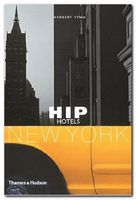
Hip Hotels: New York
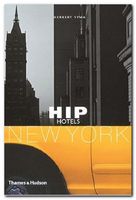 Who would have thought that books on architecture and interior design would suddenly become fashionable. But that's what's happened with this Hip Hotels series, which made a big impact when it first appeared a couple of years ago. What are Hip Hotels? Well, Herbert Ypma defines them as Highly Individual Places, but I think it's a bit more than that - because even traditional hotels can be individual. The selection he shows (and he claims to have stayed in them) are all very modern, usually minimalist, and the emphasis throughout is that they are located in very fashionable parts of the city - even if that means you're in the Meatpacking District. But he covers other parts of the city too - from the Lower East to the Upper West Side, with Tribeca, SoHo, Midtown, and Times Square in between ... Read more >>
22 November 2006
Penguin Book Covers
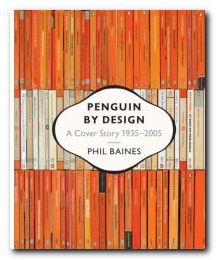 If you're interested in typography, graphic design, bibliography, collecting books, or just cultural nostalgia, this book is an absolute treat. It's a beautifully illustrated history of the cover designs used for the Penguin imprint from its creation in 1935 to the present. Penguins were first sold for sixpence (2.5p) which was the price of a packet of ten cigarettes. That's cheap by today's standards when ten fags cost £2.70 but a typical Penguin costs twice that. Right from the start, Penguins were marketed via the elegance and consistency of their cover designs, with their easily recognisable orange covers and their perky logo. And it's no accident that Penguin was (and still is) such a successful imprint. Its founder Allen Lane employed some of the most gifted graphic designers and ... Read more >>
16 November 2006
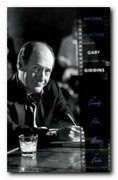
Cultural Criticism — Gary Giddins
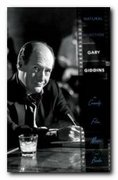 'A critic,' Philip Larkin once declared, 'is a man who likes some things and dislikes others, and finds reasons for doing so and for trying to persuade other people to do so.' Gary Giddins has been doing this for many years. In several collections of jazz journalism (including the recent Weather Bird) Giddins has conveyed his enthusiasm for and devotion to the music and its practitioners. This latest book includes pieces on jazz, but also illuminating essays on silent movies, film noir, TV shows, DVD and CD releases, Norman Mailer, Ralph Ellison, Classics Illustrated, Friedrich Durrenmatt and the Jewish novelist Soma Morgenstern. Giddins' firm conviction is that ... Read more >>
more ARTS & MUSIC books
14 November 2006
TittyBangBang! - They're back!

The BBC have given it no publicity, and they make it damned hard to find in their listings - but TittyBangBang! is back for a second series on BBC 3. It features some of the same characters - the twitching darters, surgically enhanced Maxine Bendix, Pete Wade (who has a new job as an estate agent), and the Italian lady ("Don't look at me! I'm shyyyyyyyyyyy!"). But the most inspired is an amazing impersonation of Tom Cruise by Lucy Montgomery. How does she do it? Prosthetic help maybe - but her acting skills are just awe inspiring. It doesn't have the novelty value of the first series, but I for one will be watching every episode. Which you can do on line - here:
12 November 2006
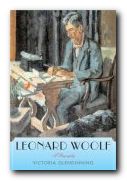
Leonard Woolf's Autobiography
 Leonard Woolf is probably best known as the husband of Virginia Woolf, but in fact he had a remarkable life and set of achievements quite apart from his wife. He was a political activist and one of the founders of the League of Nations (which became the United Nations); he was a novelist and a journalist; and throughout the whole of his adult life he was a professional publisher, in charge of the very successful Hogarth Press, which he founded. The first volume of his autobiography deals with his childhood in a prosperous upper middle-class Jewish family and his early memories of growing up in late Victorian London, then his intellectual flowering when he went to Cambridge. The are some wonderful character sketches of his contemporaries, who became luminaries of the Bloomsbury Group, including Saxon Sydney Turner, Lytton Strachey, and Clive Bell. You also get full details of all the property leases and house buyings of this group as it established its regular system of one place in town and another in the countryside ... Read more >>
more BLOOMSBURY GROUP books
03 November 2006
Talk to the Hand - Lynne Truss strikes again
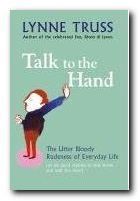
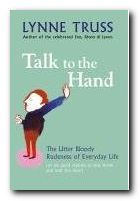 Lynne Truss must surely be one of the next participants lined up ready for the TV show Grumpy Old Women - in which celebrity ladies of a certain age ventilate their pet grievances. First she was grumpy about failures of punctuation in Eats, Shoots & Leaves, and now she is being grumpy about modern manners - or lack of them. Fortunately, her grumpiness is served up with generous helpings of witty exposition, well dramatised anecdote, and self-deprecating humour. She rails against people who don't say 'Thank you' when you hold open a door for them - but goes further by analysing the reasons for our social expectations and our reactions to them when thwarted. The same is true for people who let their children run amok in other people's houses - and are affronted if you don't share share their ... Read more >>
more ARTS & SOCIETY books